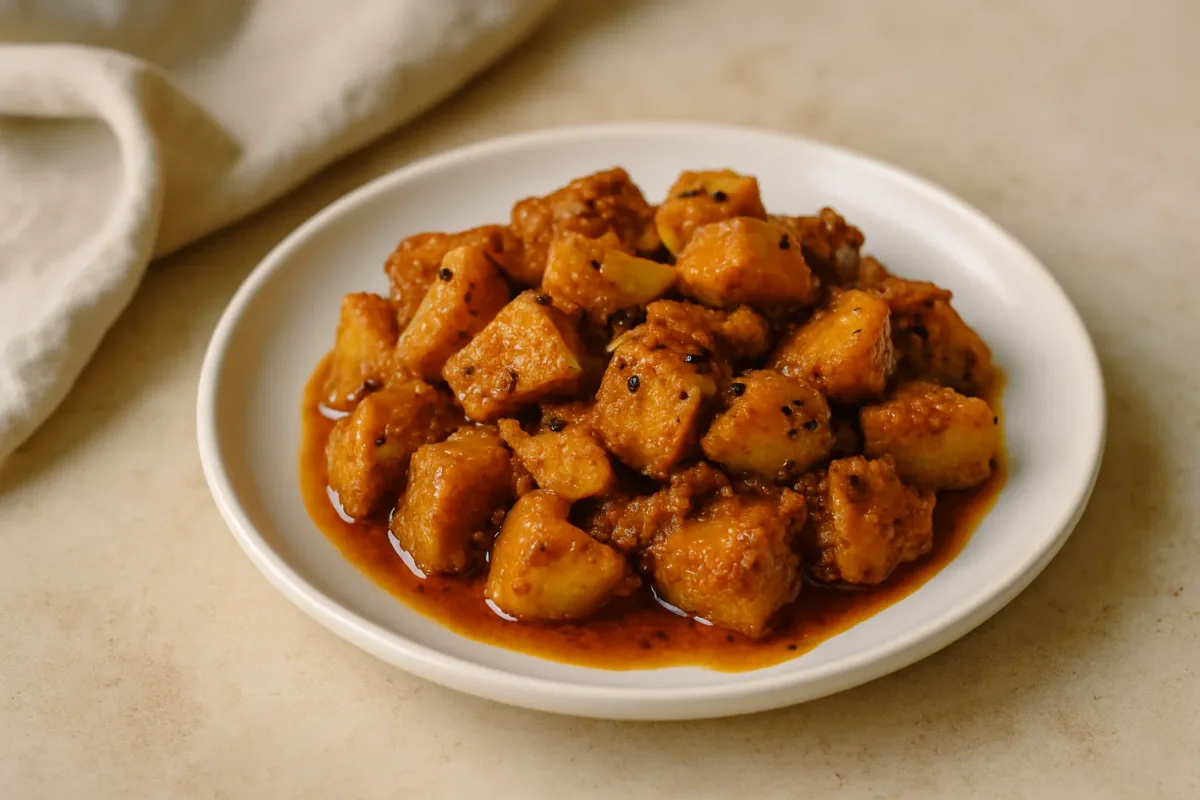
Factory-Scale Mango Pickle (Oil-Preserved, Shelf-Stable)

Sign in to rate this recipe

Haz esta receta a tu manera, gratis
Grandmabot puede adaptarla a tu dieta, cambiar ingredientes o ajustar las porciones. Cuenta gratis, sin tarjeta.
Ingredientes
Instrucciones
- 1
Raw material prep — inspect, wash, sanitize, and sort mangoes. Remove spoiled pieces. Cut to uniform 20–25 mm cubes. Drain thoroughly.
- 2
Dry-salting (curing) — In a sanitized SS vessel, toss mango pieces with 9 kg salt. Hold 12–24 hours at 4–10°C or ambient controlled room (prefer cooler) to draw moisture. Drain and retain minimal brine; target visible surface moisture removed.
- 3
Blanch / enzyme control (optional) — For extra stability, blanch mango pieces 60–90 sec in 80–85°C water or steam, then cool on sanitized belt and drain. Pat dry to remove surface moisture. This reduces enzyme activity and microbial load.
- 4
Spice & oil heat treatment — Roast spices (if not pre-roasted) until aromatic; cool. In a kettle, heat oil to 90–95°C, add roasted spice mix, mustard seeds, garlic/ginger; hold 3–5 minutes to bloom flavors and reduce microbial load. Cool oil-spice to 60–65°C for mixing.
- 5
Acidification — Mix vinegar into the oil-spice blend or spray evenly onto mango pieces prior to oiling to achieve final product pH ≤ 4.0–4.2. If using concentrated acetic acid, dose carefully and verify pH with calibrated meter. Target pH ≤ 4.0 for margin.
- 6
Combine — In a sanitary mixing vessel, add drained mango pieces, sprinkle the tempered spice-oil-acid blend while agitating to coat uniformly. Ensure total oil ~20% of finished weight. Check and adjust seasoning, vinegar, and preservative additions now.
- 7
Preservative & antioxidant addition — If using, dissolve preservative in small waterless medium or oil as recommended and add to batch while mixing. Add tocopherols to oil if used.
- 8
Cooling & resting — Allow mixture to equilibrate 12–24 hours at controlled cool ambient (15–25°C) so flavors marry and oil rises to form protective layer. Inspect for free water; drain if excessive.
- 9
Filling & headspace control — Fill jars/bottles with clean, sanitized fill equipment leaving minimal headspace. Flush headspace with nitrogen if available to reduce oxygen. Ensure oil fully covers solids to create continuous oil layer.
- 10
Sealing & pasteurization choice — Cap hermetically. For non-retorted product rely on pH, aw, oil, and preservative controls. If thermal processing desired, perform validated hot-fill or mild pasteurization (e.g., 85°C for 10–15 min or validated retort cycle) ensuring product texture acceptance.
- 11
Cooling & storage — Cool sealed containers to ambient; store in cool, dark warehouse. Label with manufacture and best-before dates.
- 12
QC tests — For each batch record: final pH (target ≤ 4.0–4.2), aw (aim <0.90), salt %, peroxide value (oil rancidity), microbial plate counts, yeast & mold limits, and sensory check. Retain samples for shelf-life program.