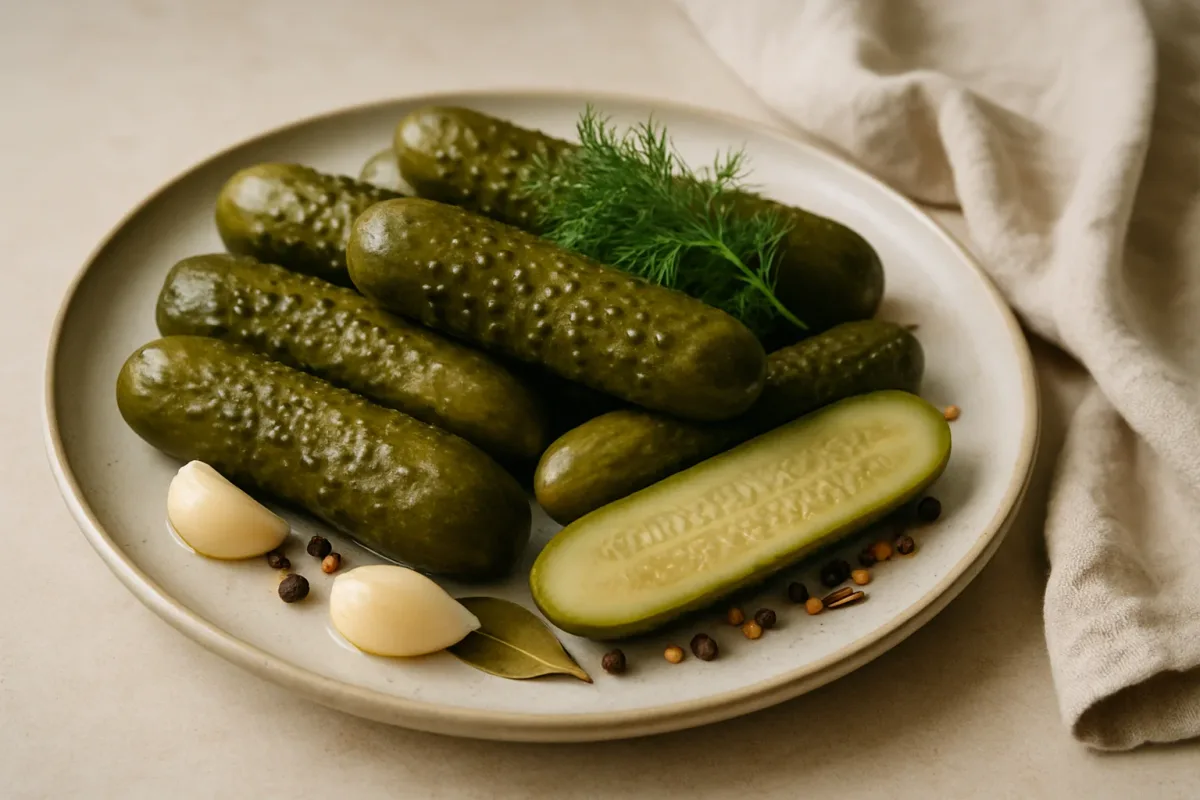
Classic Crunchy Dill Pickles (Beginner-Friendly, Scalable)

Sign in to rate this recipe

Make this recipe your way, free
Grandmabot can adjust it for your diet, swap ingredients or change the servings. Free account, no credit card.
Ingredients
Instructions
- 1
Choose your preservation method — quick vinegar pickles (refrigerator or hot-packed shelf-stable after processing) or fermented lacto-fermented pickles (longer shelf-life when canned/pasteurized). For a beginner factory that needs shelf-life and consistency, I recommend the vinegar hot-pack method with proper water-bath or steam processing — reliable and scalable. I’ll give the hot-pack method here and note fermentation tips after.
- 2
Prep cucumbers — sort for firm, blemish-free fruit. Wash thoroughly. Trim blossom end (1/16–1/8 inch) to reduce softening. Leave whole or halve/quarter lengthwise depending on jar size.
- 3
Sanitize jars and lids — wash in hot soapy water, rinse, then keep hot in simmering water, or run through a dishwasher cycle. Warm jars prevent breakage during hot-fill.
- 4
Make the brine (base ratio you can scale): For every 2 parts water : 1 part white vinegar (5% acidity), add 0.25 part granulated sugar (optional) and 0.1 part kosher salt. Example: for 8 cups water + 4 cups vinegar, add 2 cups sugar (optional) and 0.8 cup kosher salt (reduce to 10 tsp per 10 quarts if using per-jar measurement). Bring brine to a rolling simmer until salt (and sugar, if used) dissolves — about 10 minutes. Keep hot.
- 5
Pack jars — into each hot quart jar place: 1 head dill (or 1–2 Tbsp dill fronds), 1 garlic clove, 1 tsp pickling spice (or measured seeds), and optionally a pinch alum (skip if using pickling lime). Pack cucumbers tightly but without crushing, leaving 1/2-inch headspace.
- 6
Hot-fill jars — pour hot brine over cucumbers, keeping 1/2-inch headspace. Remove air bubbles (use a non-metal tool), wipe rims clean, place lids and screw bands fingertip-tight.
- 7
Process jars — for quart jars, water-bath process for 10 minutes at sea level (increase time for higher altitudes). Use a boiling-water canner or steam canner. This ensures shelf-stability and safety.
- 8
Cool and store — remove jars and let cool 12–24 hours; lids should seal (center indents). Label with date. Let flavors mature 2–4 weeks before heavy eating, though they’ll be tasty sooner. Store in a cool, dark place; shelf life 1–2 years when sealed and processed properly.
- 9
Scaling to factory batches — keep the same brine ratios. Use commercial-grade stainless tanks for brine, food-safe conveyors for packing, and industrial water-bath or continuous retort systems for processing. Maintain rigorous sanitation (HACCP), record keeping, pH testing (packaged pickles should measure pH ≤ 4.6), and use vinegar at 5% acidity or adjust accordingly. Work with a food safety consultant for regulatory compliance and shelf-life validation.
- 10
Optional lacto-fermentation route (for a tangy, probiotic pickle): use a 5% salt brine (50 g salt per liter water). Submerge cucumbers with weights in fermentation vessel for 7–14 days at 65–72°F until desired sourness, then either refrigerate (short shelf-life) or pasteurize/can to extend shelf-life — fermentation requires lab testing for industrial scale and careful pH monitoring.
- 11
Quality tips from my kitchen: always use non-iodized salt, keep vinegar at 5% acidity (label reads this), trim blossom end, don’t overcrowd jars, and taste test small batches before scaling. Use glass or food-grade plastic for storage. For crunch, brief blanching in ice water after hot-fill helps, or include grape leaves (tannin trick) if you like the old-fashioned firmness.
- 12
Troubleshooting: soft pickles — check cucumber age, remove blossom ends, ensure correct salt and processing. Cloudy brine — often harmless (yeasts/minerals) but improve sanitation and water quality. Failed seals — reprocess within 24 hours or refrigerate.